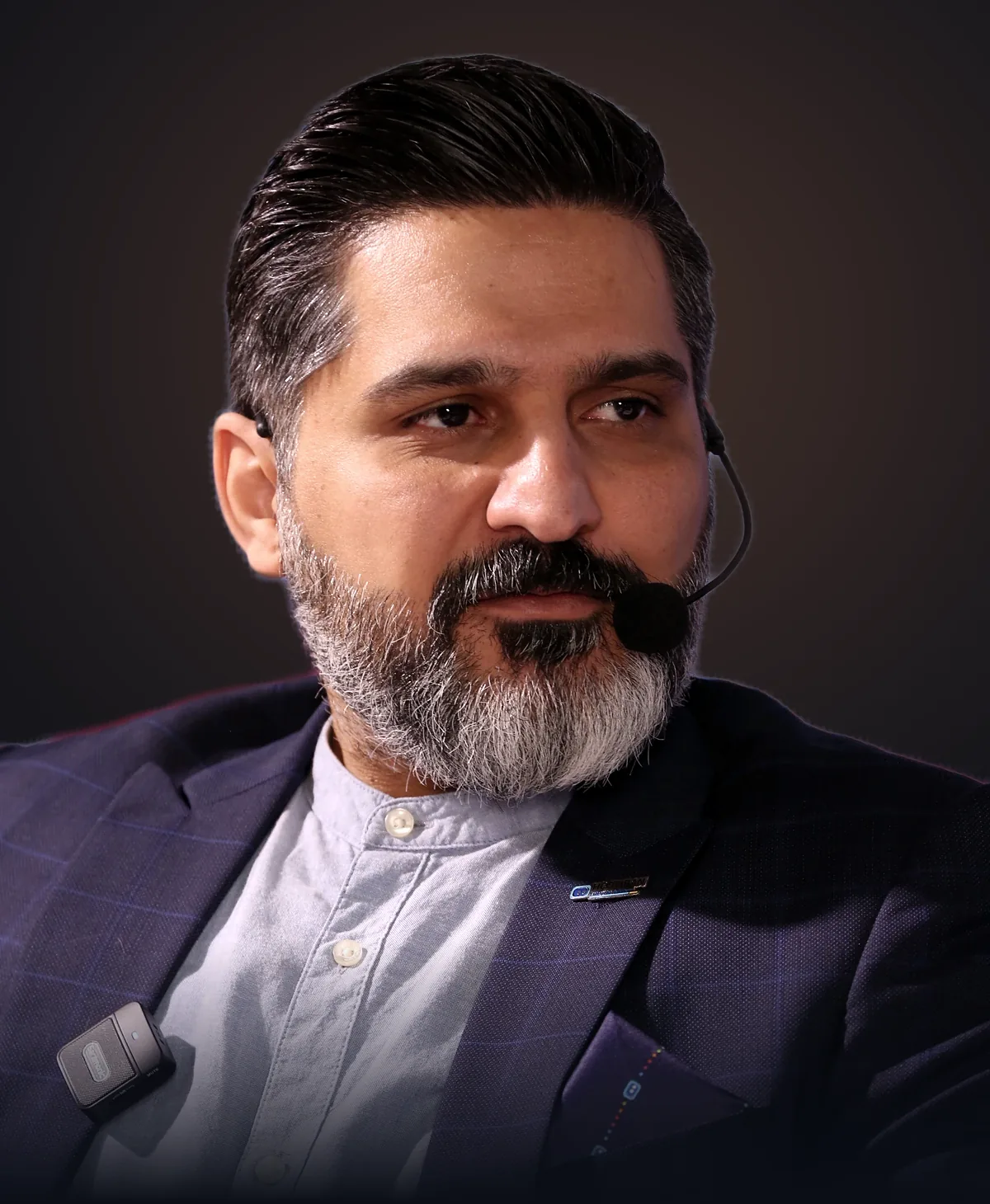
I turn your strategy into technology that works every day.
For organizations that want technology to be an engine of growth, not a bottleneck. I lead strategy, people, architecture and execution as one system across AI, cloud, platforms and infrastructure, with outcomes measured against real evidence, not promises.
What a technology leader should deliver to an organization.
Six common organizational concerns about technology, how I answer each one, and evidence you can check for yourself.
Technology aligned with strategy
The concernTechnology lags behind the strategy, or runs its own agenda.
I build the technology roadmap from business direction, capability gaps and constraints, not from tool catalogs and trends. Every technology investment is tied to a specific organizational capability.
The concernTechnical decisions are hard for executives to understand or defend.
I translate technical trade-offs into choices, risks and consequences, so decision makers know exactly what they are deciding. It is the same work I did as an IT advisor at Saman Bank.
The concernOperations depend on a few key experts and manual work.
I turn scattered know-how into platforms, workflows and self-service, so delivering a service becomes repeatable instead of depending on one particular person.
The concernAI is either a missed opportunity or an uncontrolled risk.
I bring AI in where it speeds up analysis and decision support, while execution authority stays behind policy, approval and audit. The result is speed without gambling on production.
The concernOutages and surprises erode customer and team trust.
I design systems for the bad day, not only the good one: detection, containment, recovery and verification after every change. Status is read from the running system, not from an optimistic dashboard.
The concernThe technical team is not growing and every decision comes back to one person.
I build context, ownership and decision frameworks and grow technical leaders, so decision quality multiplies across the organization, even without passing through the CTO.
Technology leadership works when strategy, people, architecture and execution are not managed in isolation. Each step produces what the next one needs.
Strategy
Strategy
Translate organizational direction into capabilities, priorities and a technology roadmap.
Clear direction and priorities
People
People
Build context, ownership and technical leaders so decision quality never depends on one person.
Decision capacity in the team
Architecture
Architecture
Make authority, state, failure and lifecycle boundaries explicit before choosing tools.
Explicit, defensible boundaries
Execution
Execution
Carry decisions through implementation, runtime evidence and a closed learning loop.
Verified outcomes
Selected transformations
Evidence, not claims: three transformations this approach has built.
Each story starts from a real situation, passes through a hard decision and ends in a capability that keeps working after delivery.
Platform Engineering / Private Cloud
4SO Platform Factory
A control plane for turning heterogeneous infrastructure into standardized, repeatable and governable platform capability across the lifecycle.
What it means for the businessLaunching new infrastructure services relies on standards and repeatability, not on manual effort and key people.
Situation
Fragmented infrastructure and tooling without a coherent platform experience.
Hard Decision
Define product authority without creating a second source of truth or duplicate platform stack.
Architecture
A control plane with explicit domain authority, capability-driven adapters, durable operations and runtime readback.
It means reporting you can decide on: what works, what does not work yet, and the risk behind each.
How we would work together
From the first conversation to an outcome proven by evidence.
Every phase has a concrete output, so it is always clear where we are and what the next decision is.
Listen
Listen
I hear the problem from you and your stakeholders: business direction, pressures and what you expect from technology.
OutputA shared picture of the problem
Diagnose
Diagnose
I map architecture, team, risks and capability gaps from evidence, not assumption.
OutputA map of risks and capability gaps
Decide
Decide
A few clear options with explicit trade-offs: what to build, what to integrate and what to defer.
OutputRoadmap and priorities
Build
Build
The team, ownership and platform that carry the decision into execution without depending on one person.
OutputOwners, platform and delivery plan
Prove
Prove
We measure the result against evidence from the running system, say honestly what does not work yet and close the learning loop.
OutputEvidence of outcome and lessons
Founder — 4SO Lab
Building a system for building systems.
I shaped 4SO Lab as an engineering practice for framing hard infrastructure problems, defining authority and failure boundaries, using AI and automation responsibly, building real products, and checking source-level claims against runtime behavior. The goal is not presentation-only prototypes; it is capability that can be installed, changed, failed, recovered and verified with evidence.
What looks correct in source must still be proven in the running system.
Strong leadership does not centralize decisions. It builds decision capacity.
The goal is not to route every important decision through the CTO. I make context explicit, move ownership closer to the decision and grow technical leaders so autonomy comes with accountability.
Develop Technical Leaders
Grow Tech Leads and senior engineers into real owners of domains and decisions.
Distribute Ownership
Distribute authority with clear boundaries and accountability.
Turn Knowledge into Systems
Convert tribal knowledge into architecture, standards, workflows and automation.
Scale Decision Quality
Principles and frameworks that scale good decisions without a CTO bottleneck.
PEOPLE × SYSTEMS
ContextEveryone understands the problem and why it matters.
OwnershipEvery domain and decision has a named owner.
Decision FrameworkPrinciples replace taste in everyday decisions.
AutonomyDecisions are made close to the problem.
AccountabilityOutcomes are checked against evidence and fed back.
Career path
From systems engineering to technology leadership.
A path from deep engineering and infrastructure leadership, through advisory work, to CTO responsibility and building 4SO Lab.
Part of technology leadership is making complex trade-offs understandable to executives, engineers and stakeholders.Full executive profile
Chief Technology OfficerHostiran
Technology leadership focused on aligning organizational direction, platform and infrastructure architecture, team capability and dependable execution.
IT Advisor to the CEOSaman Bank
Advisory work at the boundary of executive decision-making and technology, translating technical trade-offs into organizational choices.
Systems Infrastructure DirectorAsiatech
Systems infrastructure leadership with an operational focus on reliability, ownership, change capacity and standardization.
Senior Charging EngineerMobinNet Telecom
Engineering experience in telecom environments where state, integration and operational continuity matter.
Senior Systems EngineerAsiatech
A deep foundation in Linux, systems engineering and infrastructure operations that later expanded into architecture and technology leadership.
Common questions
Short answers to the questions that usually come first.
If your question is not here, it is probably the best place to start a conversation.
Should we invest in AI right now?
Start from the problem, not the model. Where analysis, search or decision support is slow and expensive, AI creates value quickly. Where mistakes are costly, AI proposes and a governed system with approval and audit executes.
Should we build or buy?
Not everything that can be built should be. Build where product ownership or differentiation matters; integrate where a mature ecosystem gives clearer boundaries and lower operating cost.
How do I know the technical team is doing well?
From evidence, not green reports. Every area has a named owner, acceptance criteria are clear up front and status is read from the running system. A report with only good news is usually incomplete.
How do we reduce the risk of outages and incidents?
By designing for failure from day one: separated failure domains, operations that resume after interruption, explicit recovery paths and verification after every change. Reliability is not an appendix written after an incident.
What happens if a key person leaves?
If the organization is built well, the work continues. I convert individual knowledge into architecture, standards, workflows and automation and distribute ownership, and that includes the CTO.
What exactly does a technology leader deliver?
A technology roadmap tied to strategy, decisions whose risks and consequences are clear, a team that owns its work, systems that run on evidence, and an honest report of what does not work yet.
Start a conversation
If technology should move your organization forward rather than hold it back, let’s talk.
The first conversation is about your problem, not about me: where you are stuck, what is at stake and whether I am the right person to solve it.